
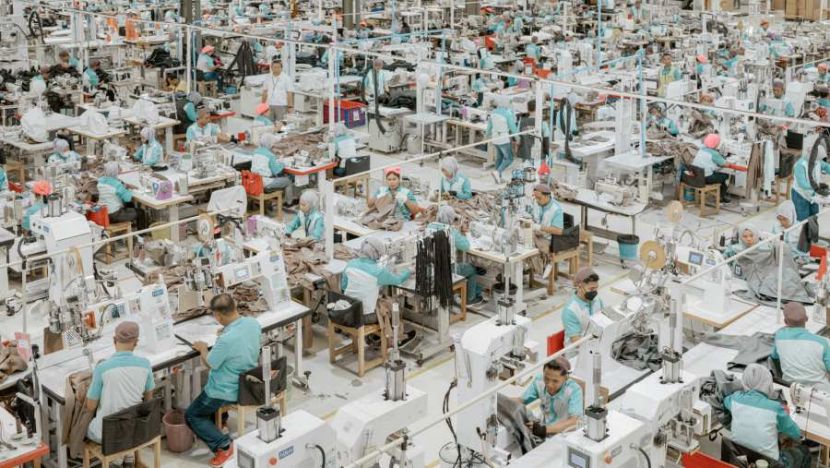
 In the second half of 2025, Sweden, China, and Japan will invest in Indonesia's textile and textile product (TPT) sector, focusing on downstream products such as fabrics and more environmentally friendly dyeing processes. The Director General of Chemical, Pharmaceutical, and Textile Industries at the Ministry of Industry stated that investment will be concentrated on downstream products like fabrics close to garments. For Japan, Indonesia will develop mechanisms to reduce carbon emissions in the fabric dyeing process by minimizing boiler usage and lowering electricity consumption derived from coal. The Indonesia-EU Comprehensive Economic Partnership Agreement has been finalized, with signing expected in Jakarta in September 2025 and entry into force in 2026, granting tariff reductions for approximately 80% of Indonesia's exports. The European market has strict sustainability standards, and Indonesia is capable of meeting these requirements, including those related to chemicals used in dyeing processes, which has attracted foreign investment. The Coordinating Minister for Economic Affairs stated that after the agreement is signed, all provisions will take effect in 2026, which is expected to accelerate the realization of 0% tariffs.
China, Sweden, and Japan Plan to Invest in Indonesia's Textile Industry
www.indoent.com
2025-08-06
In the second half of 2025, Sweden, China, and Japan will invest in Indonesia's textile and textile product (TPT) sector, with a focus on downstream products such as fabrics and more environmentally friendly dyeing processes. The Director General of Chemical, Pharmaceutical, and Textile Industries at the Ministry of Industry stated that investment will be concentrated on downstream products like fabrics close to garments. For Japan, Indonesia will develop mechanisms to reduce carbon emissions in the fabric dyeing process by minimizing boiler usage and reducing electricity consumption derived from coal. The Indonesia-EU Comprehensive Economic Partnership Agreement has been finalized, with signing expected in Jakarta in September 2025 and entry into force in 2026, granting tariff reductions for approximately 80% of Indonesia's exports.
In the second half of 2025, Sweden, China, and Japan will invest in Indonesia's textile and textile product (TPT) sector, focusing on downstream products such as fabrics and more environmentally friendly dyeing processes. The Director General of Chemical, Pharmaceutical, and Textile Industries at the Ministry of Industry stated that investment will be concentrated on downstream products like fabrics close to garments. For Japan, Indonesia will develop mechanisms to reduce carbon emissions in the fabric dyeing process by minimizing boiler usage and lowering electricity consumption derived from coal. The Indonesia-EU Comprehensive Economic Partnership Agreement has been finalized, with signing expected in Jakarta in September 2025 and entry into force in 2026, granting tariff reductions for approximately 80% of Indonesia's exports. The European market has strict sustainability standards, and Indonesia is capable of meeting these requirements, including those related to chemicals used in dyeing processes, which has attracted foreign investment. The Coordinating Minister for Economic Affairs stated that after the agreement is signed, all provisions will take effect in 2026, which is expected to accelerate the realization of 0% tariffs.
Tags
Industry News
Share to
Related Reading
 Industry Flash
Cheap Chinese Plastics Impact Indonesia's Petrochemical Industry, Association Calls for Protection
2026-09-03 Industry News
Investment Heat in Two Key Industrial Parks in Central Java Continues to Rise
2026-08-31 Industry News