
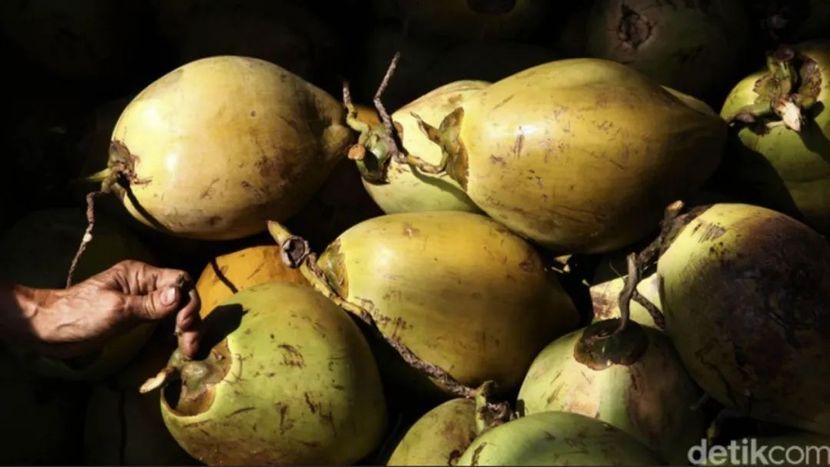
 Indonesia has significant potential in the coconut industry, with its coconut and related processed products exported to many countries. China has made major investments in Indonesia's coconut industry. In 2025, among the total coconut planting area in Indonesia, smallholder plantations account for the largest share at 3,274,321 hectares; state-owned large plantations cover 443 hectares; and private large plantations cover 36,591 hectares. Compared to 2024, the area of smallholder plantations and state-owned large plantations has increased, while private large plantations decreased from 42,146 hectares. In 2025, smallholder plantations are expected to produce approximately 2,821,927 tons of coconuts, higher than 2,791,147 tons in 2024; state-owned large plantations are expected to produce 565 tons; and private large plantations are expected to produce 34,345 tons. In 2025, smallholder plantation productivity is expected to reach 1,127 kg/ha, the highest since 2022; state-owned large plantation productivity is expected to be 1,285 kg/ha, far higher than in 2023-2024; private large plantations have the highest productivity at 1,381 kg/ha. In 2023, of the 3.31 million hectares of coconut plantations, about 2.54 million hectares were productive, 410,780 hectares were immature, and 375,030 hectares were damaged or non-productive. The main producing provinces are spread across 38 provinces, with Riau Province being the largest, with an area of 440,000 hectares and an output of 411,000 tons. In December 2023, the domestic coconut price in Indonesia rose slightly to IDR 6,375 per kg, compared to IDR 6,336 per kg in November. In December 2023, the international coconut price was US$1,109 per metric ton, down from US$1,115 per metric ton in November.
In 2023, Indonesia's cumulative coconut exports reached 2.17 million tons, valued at US$1.31 million (approximately IDR 215.2 billion). Exports involved 15 HS codes, of which HS 15131990 (semi-processed coconut oil) had the largest export volume, valued at US$392.26, accounting for 29.84%. Among the main export markets, China accounted for 17.42%, valued at approximately US$228,947 (about IDR 37.4 billion); Malaysia accounted for 15.96%, valued at US$209,812; the Netherlands accounted for 11.15%, valued at US$146,561; the United States accounted for 8.47%, valued at US$111,300; Sri Lanka accounted for 6.41%, valued at US$84,248; South Korea accounted for 4.01%, valued at US$52,725; and Thailand accounted for 1.75%, valued at US$22,946. China's investment in Indonesia's coconut industry has reached US$100 million (approximately IDR 1.67 trillion) for building coconut processing plants or facilities, and investment willingness continues to rise. The Minister of Investment and Downstream Industry mentioned that China's investment in Indonesia is active, not only in minerals but also in sectors like coconuts, and related projects have recently started construction.
Indonesia has significant potential in the coconut industry, with its coconut and related processed products exported to many countries. China has made major investments in Indonesia's coconut industry. In 2025, among the total coconut planting area in Indonesia, smallholder plantations account for the largest share at 3,274,321 hectares; state-owned large plantations cover 443 hectares; and private large plantations cover 36,591 hectares. Compared to 2024, the area of smallholder plantations and state-owned large plantations has increased, while private large plantations decreased from 42,146 hectares. In 2025, smallholder plantations are expected to produce approximately 2,821,927 tons of coconuts, higher than 2,791,147 tons in 2024; state-owned large plantations are expected to produce 565 tons; and private large plantations are expected to produce 34,345 tons. In 2025, smallholder plantation productivity is expected to reach 1,127 kg/ha, the highest since 2022; state-owned large plantation productivity is expected to be 1,285 kg/ha, far higher than in 2023-2024; private large plantations have the highest productivity at 1,381 kg/ha. In 2023, of the 3.31 million hectares of coconut plantations, about 2.54 million hectares were productive, 410,780 hectares were immature, and 375,030 hectares were damaged or non-productive. The main producing provinces are spread across 38 provinces, with Riau Province being the largest, with an area of 440,000 hectares and an output of 411,000 tons. In December 2023, the domestic coconut price in Indonesia rose slightly to IDR 6,375 per kg, compared to IDR 6,336 per kg in November. In December 2023, the international coconut price was US$1,109 per metric ton, down from US$1,115 per metric ton in November.
In 2023, Indonesia's cumulative coconut exports reached 2.17 million tons, valued at US$1.31 million (approximately IDR 215.2 billion). Exports involved 15 HS codes, of which HS 15131990 (semi-processed coconut oil) had the largest export volume, valued at US$392.26, accounting for 29.84%. Among the main export markets, China accounted for 17.42%, valued at approximately US$228,947 (about IDR 37.4 billion); Malaysia accounted for 15.96%, valued at US$209,812; the Netherlands accounted for 11.15%, valued at US$146,561; the United States accounted for 8.47%, valued at US$111,300; Sri Lanka accounted for 6.41%, valued at US$84,248; South Korea accounted for 4.01%, valued at US$52,725; and Thailand accounted for 1.75%, valued at US$22,946. China's investment in Indonesia's coconut industry has reached US$100 million (approximately IDR 1.67 trillion) for building coconut processing plants or facilities, and investment willingness continues to rise. The Minister of Investment and Downstream Industry mentioned that China's investment in Indonesia is active, not only in minerals but also in sectors like coconuts, and related projects have recently started construction.
China Actively Invests in Developing Indonesia's Coconut Downstream Industry
www.indoent.com
2025-08-09
Indonesia has significant potential in the coconut industry, with its coconut and related processed products exported to many countries. China has made major investments in Indonesia's coconut industry. In 2025, among the total coconut planting area in Indonesia, smallholder plantations account for the largest share at 3,274,321 hectares; state-owned large plantations cover 443 hectares; and private large plantations cover 36,591 hectares. Compared to 2024, the area of smallholder plantations and state-owned large plantations has increased, while private large plantations decreased from 42,146 hectares. In 2025, smallholder plantations are expected to produce approximately 2,821,927 tons of coconuts, higher than
Indonesia has significant potential in the coconut industry, with its coconut and related processed products exported to many countries. China has made major investments in Indonesia's coconut industry. In 2025, among the total coconut planting area in Indonesia, smallholder plantations account for the largest share at 3,274,321 hectares; state-owned large plantations cover 443 hectares; and private large plantations cover 36,591 hectares. Compared to 2024, the area of smallholder plantations and state-owned large plantations has increased, while private large plantations decreased from 42,146 hectares. In 2025, smallholder plantations are expected to produce approximately 2,821,927 tons of coconuts, higher than 2,791,147 tons in 2024; state-owned large plantations are expected to produce 565 tons; and private large plantations are expected to produce 34,345 tons. In 2025, smallholder plantation productivity is expected to reach 1,127 kg/ha, the highest since 2022; state-owned large plantation productivity is expected to be 1,285 kg/ha, far higher than in 2023-2024; private large plantations have the highest productivity at 1,381 kg/ha. In 2023, of the 3.31 million hectares of coconut plantations, about 2.54 million hectares were productive, 410,780 hectares were immature, and 375,030 hectares were damaged or non-productive. The main producing provinces are spread across 38 provinces, with Riau Province being the largest, with an area of 440,000 hectares and an output of 411,000 tons. In December 2023, the domestic coconut price in Indonesia rose slightly to IDR 6,375 per kg, compared to IDR 6,336 per kg in November. In December 2023, the international coconut price was US$1,109 per metric ton, down from US$1,115 per metric ton in November.
In 2023, Indonesia's cumulative coconut exports reached 2.17 million tons, valued at US$1.31 million (approximately IDR 215.2 billion). Exports involved 15 HS codes, of which HS 15131990 (semi-processed coconut oil) had the largest export volume, valued at US$392.26, accounting for 29.84%. Among the main export markets, China accounted for 17.42%, valued at approximately US$228,947 (about IDR 37.4 billion); Malaysia accounted for 15.96%, valued at US$209,812; the Netherlands accounted for 11.15%, valued at US$146,561; the United States accounted for 8.47%, valued at US$111,300; Sri Lanka accounted for 6.41%, valued at US$84,248; South Korea accounted for 4.01%, valued at US$52,725; and Thailand accounted for 1.75%, valued at US$22,946. China's investment in Indonesia's coconut industry has reached US$100 million (approximately IDR 1.67 trillion) for building coconut processing plants or facilities, and investment willingness continues to rise. The Minister of Investment and Downstream Industry mentioned that China's investment in Indonesia is active, not only in minerals but also in sectors like coconuts, and related projects have recently started construction.
Tags
Industry News
Share to
Related Reading
 Industry Flash
Cheap Chinese Plastics Impact Indonesia's Petrochemical Industry, Association Calls for Protection
2026-09-03 Industry News
Investment Heat in Two Key Industrial Parks in Central Java Continues to Rise
2026-08-31 Industry News