
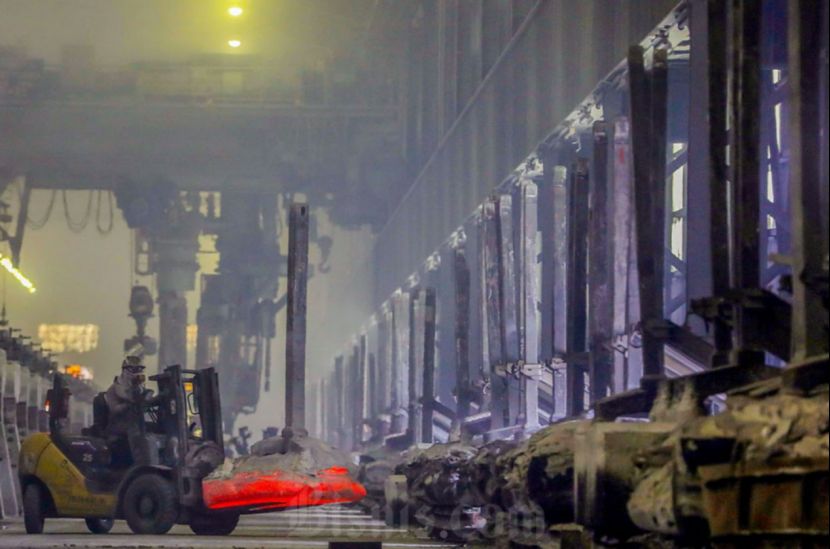
 Chinese capital is accelerating its布局 into Indonesia's aluminum industry chain. The Ministry of Energy and Mineral Resources confirmed that Nanshan Aluminum has entered the Galang Batang Special Economic Zone on Bintan Island (annual capacity of 2 million tons of alumina); Hongqiao Aluminum is expanding its West Kalimantan alumina plant through PT WHW (capacity doubled to 4 million tons); and three other Chinese companies are negotiating electrolytic aluminum plant projects (planned investment of USD 1.2 billion).
Indonesia has 7.4 billion tons of bauxite reserves (third globally), with 2025 production locked at 14 million tons (matching existing smelting capacity).
The 2023 bauxite export ban forced domestic processing; the government requires new projects to extend to end products (such as automotive sheets). However, the country has only one electrolytic aluminum plant, Inalum (annual capacity of 500,000 tons), and lagging port/power infrastructure constrain project progress. The Ministry of Energy and Mineral Resources has also strengthened environmental compliance reviews (shutting down 2 illegal mining companies).
China leverages Indonesia to bypass import restrictions on Australian bauxite (reducing dependence on Australian bauxite to 40% by 2025), meeting the aluminum demand of CATL and BYD's Indonesian battery factories. Currently, 4 alumina plants are operational (total capacity of 4.3 million tons), with an electrolytic aluminum conversion rate of only 11.6%. The target is to increase electrolytic aluminum capacity to 2 million tons by 2029.
Chinese capital is accelerating its布局 into Indonesia's aluminum industry chain. The Ministry of Energy and Mineral Resources confirmed that Nanshan Aluminum has entered the Galang Batang Special Economic Zone on Bintan Island (annual capacity of 2 million tons of alumina); Hongqiao Aluminum is expanding its West Kalimantan alumina plant through PT WHW (capacity doubled to 4 million tons); and three other Chinese companies are negotiating electrolytic aluminum plant projects (planned investment of USD 1.2 billion).
Indonesia has 7.4 billion tons of bauxite reserves (third globally), with 2025 production locked at 14 million tons (matching existing smelting capacity).
The 2023 bauxite export ban forced domestic processing; the government requires new projects to extend to end products (such as automotive sheets). However, the country has only one electrolytic aluminum plant, Inalum (annual capacity of 500,000 tons), and lagging port/power infrastructure constrain project progress. The Ministry of Energy and Mineral Resources has also strengthened environmental compliance reviews (shutting down 2 illegal mining companies).
China leverages Indonesia to bypass import restrictions on Australian bauxite (reducing dependence on Australian bauxite to 40% by 2025), meeting the aluminum demand of CATL and BYD's Indonesian battery factories. Currently, 4 alumina plants are operational (total capacity of 4.3 million tons), with an electrolytic aluminum conversion rate of only 11.6%. The target is to increase electrolytic aluminum capacity to 2 million tons by 2029.
Chinese Companies Accelerate Entry into Indonesia's Aluminum Industry Chain
www.indoent.com
2025-08-28
Chinese capital is accelerating its布局 into Indonesia's aluminum industry chain. The Ministry of Energy and Mineral Resources confirmed that Nanshan Aluminum has entered the Galang Batang Special Economic Zone on Bintan Island (annual capacity of 2 million tons of alumina); Hongqiao Aluminum is expanding its West Kalimantan alumina plant through PT WHW (capacity doubled to 4 million tons); and three other Chinese companies are negotiating electrolytic aluminum plant projects (planned investment of USD 1.2 billion). Indonesia has 7.4 billion tons of bauxite reserves (third globally), with 2025 production locked at 14 million tons (matching existing smelting capacity). In 2023, the bauxite export ban forced dom
Chinese capital is accelerating its布局 into Indonesia's aluminum industry chain. The Ministry of Energy and Mineral Resources confirmed that Nanshan Aluminum has entered the Galang Batang Special Economic Zone on Bintan Island (annual capacity of 2 million tons of alumina); Hongqiao Aluminum is expanding its West Kalimantan alumina plant through PT WHW (capacity doubled to 4 million tons); and three other Chinese companies are negotiating electrolytic aluminum plant projects (planned investment of USD 1.2 billion).
Indonesia has 7.4 billion tons of bauxite reserves (third globally), with 2025 production locked at 14 million tons (matching existing smelting capacity).
The 2023 bauxite export ban forced domestic processing; the government requires new projects to extend to end products (such as automotive sheets). However, the country has only one electrolytic aluminum plant, Inalum (annual capacity of 500,000 tons), and lagging port/power infrastructure constrain project progress. The Ministry of Energy and Mineral Resources has also strengthened environmental compliance reviews (shutting down 2 illegal mining companies).
China leverages Indonesia to bypass import restrictions on Australian bauxite (reducing dependence on Australian bauxite to 40% by 2025), meeting the aluminum demand of CATL and BYD's Indonesian battery factories. Currently, 4 alumina plants are operational (total capacity of 4.3 million tons), with an electrolytic aluminum conversion rate of only 11.6%. The target is to increase electrolytic aluminum capacity to 2 million tons by 2029.
Share to
Related Reading
 China Investment News
China's AiMOGA Humanoid Robot Obtains Three International Certifications
2026-09-07 China Investment News
Only Three Chinese Automakers Have Independently Built Factories in Indonesia
2026-09-05 Chinese Investment News