
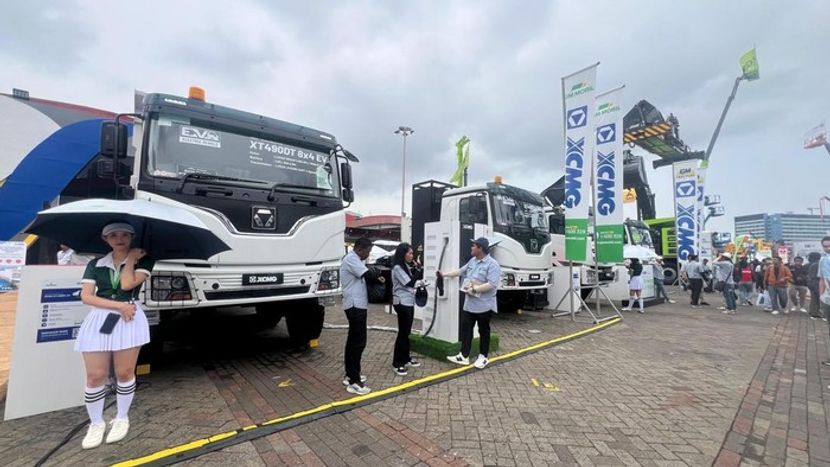
 Indonesia's import of Chinese trucks has raised concerns among local automakers, with some companies already affected. Automotive analysts point to a lack of coordination in policies and regulations regarding off-highway commercial vehicles for mining areas among the Ministry of Energy, Ministry of Transportation, and Ministry of Industry. Japanese automakers face competitive imbalance due to policy overlaps. Chinese trucks used in enclosed mining areas are not subject to the same regulations, with many still using Euro II or Euro III engines, while Japanese automakers have invested trillions of rupiah to upgrade production lines to meet the government's required Euro IV standards, resulting in higher costs.
Mitsubishi Fuso has already been impacted by imported Chinese trucks and has raised the issue with the Indonesian Automotive Industry Association (Gaikindo), but the government has yet to provide a solution. The commercial vehicle sector is labor-intensive and contributes significantly to the national economy. The Secretary General of Gaikindo stated that while imported Chinese trucks generate profits, they also threaten the local industry, especially automakers that have made substantial investments. As of July, an estimated nearly 7,000 commercial vehicles were imported, with the number potentially reaching 14,000 by year-end.
Furthermore, vehicle emission standards are a government-set strategy, and the import of completely built-up (CBU) trucks has already had an impact, with some auto parts suppliers cutting nearly half of their workforce. The Secretary General of the Indonesian Automotive and Motorcycle Industry Federation (GIAMM) urged an immediate halt to the import of CBU trucks to prevent further impact on industries such as parts and body manufacturing.
Indonesia's import of Chinese trucks has raised concerns among local automakers, with some companies already affected. Automotive analysts point to a lack of coordination in policies and regulations regarding off-highway commercial vehicles for mining areas among the Ministry of Energy, Ministry of Transportation, and Ministry of Industry. Japanese automakers face competitive imbalance due to policy overlaps. Chinese trucks used in enclosed mining areas are not subject to the same regulations, with many still using Euro II or Euro III engines, while Japanese automakers have invested trillions of rupiah to upgrade production lines to meet the government's required Euro IV standards, resulting in higher costs.
Mitsubishi Fuso has already been impacted by imported Chinese trucks and has raised the issue with the Indonesian Automotive Industry Association (Gaikindo), but the government has yet to provide a solution. The commercial vehicle sector is labor-intensive and contributes significantly to the national economy. The Secretary General of Gaikindo stated that while imported Chinese trucks generate profits, they also threaten the local industry, especially automakers that have made substantial investments. As of July, an estimated nearly 7,000 commercial vehicles were imported, with the number potentially reaching 14,000 by year-end.
Furthermore, vehicle emission standards are a government-set strategy, and the import of completely built-up (CBU) trucks has already had an impact, with some auto parts suppliers cutting nearly half of their workforce. The Secretary General of the Indonesian Automotive and Motorcycle Industry Federation (GIAMM) urged an immediate halt to the import of CBU trucks to prevent further impact on industries such as parts and body manufacturing.
Influx of Chinese Imported Trucks Impacts Local Automakers
www.indoent.com
2025-11-17
Indonesia's import of Chinese trucks has raised concerns among local automakers, with some companies already affected. Automotive analysts point to a lack of coordination in policies and regulations regarding off-highway commercial vehicles (e.g., for mining areas) among the Ministry of Energy, Ministry of Transportation, and Ministry of Industry. Japanese automakers face competitive imbalance due to overlapping policies. Chinese trucks used in enclosed mining areas are not subject to the same regulations, with many still using Euro II or Euro III engines, while Japanese automakers have invested trillions of rupiah to upgrade production lines to meet the government's Euro IV standards, resulting in higher costs. Mitsubishi Fuso has already been impacted by imported Chinese trucks and has raised the issue with the Indonesian Automotive Industry Association (Gaikindo), but the government has yet to provide a solution.
Indonesia's import of Chinese trucks has raised concerns among local automakers, with some companies already affected. Automotive analysts point to a lack of coordination in policies and regulations regarding off-highway commercial vehicles for mining areas among the Ministry of Energy, Ministry of Transportation, and Ministry of Industry. Japanese automakers face competitive imbalance due to policy overlaps. Chinese trucks used in enclosed mining areas are not subject to the same regulations, with many still using Euro II or Euro III engines, while Japanese automakers have invested trillions of rupiah to upgrade production lines to meet the government's required Euro IV standards, resulting in higher costs.
Mitsubishi Fuso has already been impacted by imported Chinese trucks and has raised the issue with the Indonesian Automotive Industry Association (Gaikindo), but the government has yet to provide a solution. The commercial vehicle sector is labor-intensive and contributes significantly to the national economy. The Secretary General of Gaikindo stated that while imported Chinese trucks generate profits, they also threaten the local industry, especially automakers that have made substantial investments. As of July, an estimated nearly 7,000 commercial vehicles were imported, with the number potentially reaching 14,000 by year-end.
Furthermore, vehicle emission standards are a government-set strategy, and the import of completely built-up (CBU) trucks has already had an impact, with some auto parts suppliers cutting nearly half of their workforce. The Secretary General of the Indonesian Automotive and Motorcycle Industry Federation (GIAMM) urged an immediate halt to the import of CBU trucks to prevent further impact on industries such as parts and body manufacturing.
Tags
Industry News
Share to
Related Reading
 Industry Flash
Cheap Chinese Plastics Impact Indonesia's Petrochemical Industry, Association Calls for Protection
2026-09-03 Industry News
Investment Heat in Two Key Industrial Parks in Central Java Continues to Rise
2026-08-31 Industry News