
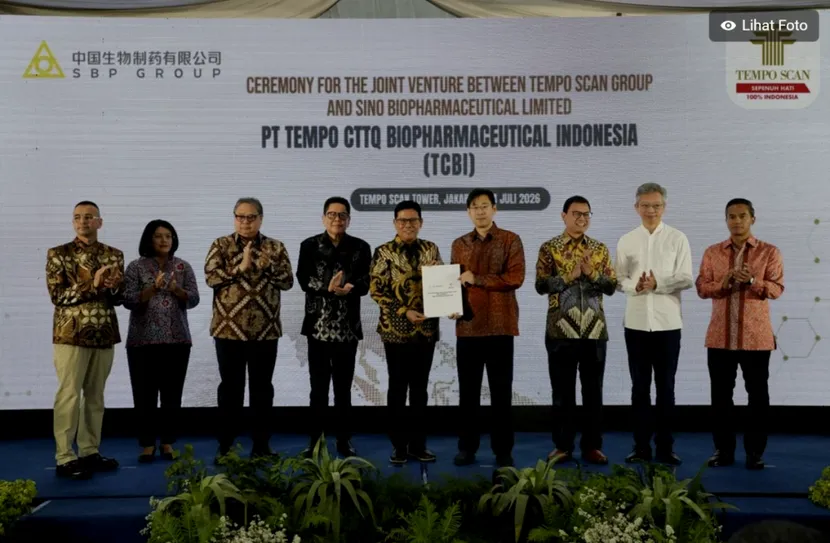
Indonesian well-known company Tempo Scan Pacific and China's Chia Tai Tianqing Pharmaceutical Group (CTTQ) officially signed a joint venture agreement in Jakarta to establish a new company, PT Tempo CTTQ Biopharmaceutical Indonesia (TCBI). This cooperation is of great significance, as it marks the first overseas national-level market deployment by CTTQ's parent company, China Biopharmaceutical (SBP Group), through a joint venture model, signaling a new phase of technology transfer and local production in China-Indonesia biomedical industry cooperation. The equity structure of the joint venture is clear: China Biopharmaceutical holds 51% and Tempo Scan holds 49%. Unlike ordinary product agency and licensing deals, the two parties are deeply cultivating the Indonesian market through a long-term joint venture, sharing risks and benefits, and building a long-term biopharmaceutical platform integrating R&D, clinical trials, production, and sales.
Chia Tai Tianqing possesses a strong R&D pipeline of innovative drugs, biologics, and biosimilars covering core therapeutic areas such as oncology, metabolism, and respiratory diseases; while Tempo Scan has a comprehensive nationwide distribution network, a mature industrial ecosystem, and 16 local factories, three of which have passed GMP international certifications. The two parties' strengths are highly complementary. In the initial phase of cooperation, priority will be given to team building, capital preparation, compliance certification, and clinical research implementation. Subsequently, technology transfer and localized production will be gradually advanced, leveraging Indonesia's existing manufacturing system to accelerate the launch of innovative drugs, reduce drug prices, and improve public accessibility. The project plans to cover high-end biopharmaceuticals that have long relied on imports, including oncology drugs, liver disease medications, diabetes treatments, monoclonal antibodies, and insulin, precisely addressing Indonesia's pharmaceutical industry gaps.
Indonesian officials highly acknowledge this cooperation. The Coordinating Minister for Economic Affairs stated that Indonesia relies on imports for 94% of chemical drugs and nearly 100% of biologics, compounded by a large patient base for cancer and diabetes, making pharmaceutical self-sufficiency an urgent need. This joint venture will effectively promote the self-reliance of Indonesia's pharmaceutical industry, reduce procurement costs, and ease the national healthcare burden. Leveraging the WHO high-level certification obtained by Indonesia's Food and Drug Authority, locally produced drugs also have export potential, helping Indonesia's pharmaceutical industry go global. This cooperation is not only a business move but also a strategic bridge in the health sector between China and Indonesia, which will facilitate multi-center clinical studies, deepen regulatory cooperation between the two countries, cultivate local scientific research and industrial talent, and comprehensively enhance Indonesia's biomedical innovation and manufacturing capabilities.


