
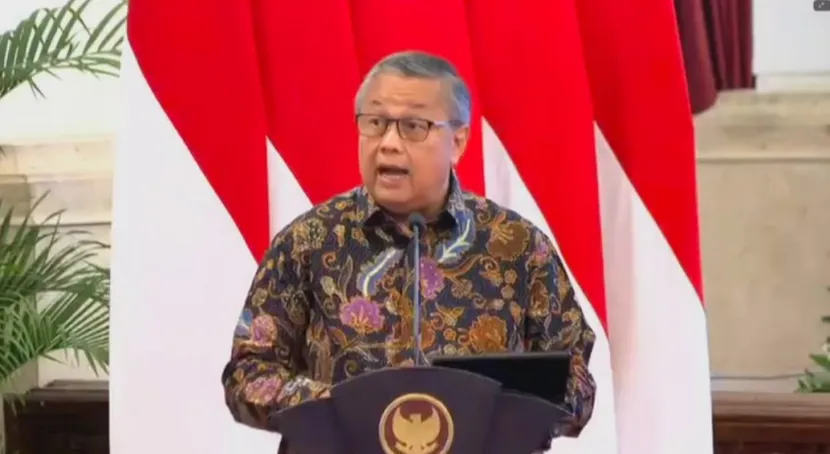
Bank Indonesia (BI) recently held a Board of Governors meeting, officially announcing the decision to maintain the benchmark interest rate (BI Rate) steady at 5.75%, not following the pace of rate hikes. At the same time, it introduced a number of significant financial incentive policies aimed at optimizing the foreign investment environment, stabilizing the Indonesian rupiah exchange rate, and attracting foreign capital back into the domestic financial market. This policy package replaces a direct rate hike plan and has become the core regulatory tool for Indonesia to stabilize the exchange rate, capital flows, and the economy.
The Governor of Bank Indonesia stated that two regulatory options were originally considered at this meeting: one was to raise the benchmark interest rate to increase domestic market interest rates, and the other was to increase incentives for hedging transactions of foreign securities portfolios and optimize the domestic non-deliverable forward (DNDF) mechanism. After comprehensive assessment, the central bank ultimately chose the second option to avoid the negative impact of rate hikes on domestic economic growth, business operations, and the fiscal system, achieving more efficient macroeconomic regulation through targeted incentive policies.
The new policy significantly increases the incentives for foreign exchange hedging transactions by foreign investors. The original 10% incentive ratio for foreign exchange hedging swaps has been raised to 12.5%, and a new 15% special incentive for domestic non-deliverable forward (DNDF) transactions has been introduced, filling a previous policy gap in this area.
The central bank's assessment indicates that the regulatory effect of this incentive package is superior to the traditional approach of a 25 basis point rate hike, enabling a more precise stabilization of the Indonesian rupiah exchange rate and inflation pressure, while safeguarding economic growth and the health of businesses and the fiscal system.
In addition to foreign investment incentives, Bank Indonesia has simultaneously stepped up the construction of the local currency settlement system, introducing supporting incentives for the Local Currency Transaction (LCT) mechanism. This mechanism has already been implemented in Malaysia, Thailand, South Korea, the UAE, and other countries. This time, Indonesia has set a 10% incentive quota for foreign exchange hedging swaps and DNDF hedging transactions under the LCT framework, encouraging the use of local currency for trade and investment.
This move aims to reduce Indonesia's reliance on the US dollar, deepen the development of the domestic foreign exchange market, and promote currency diversification in cross-border transactions.
Overall, Bank Indonesia's current policy is centered on "stabilizing interest rates, optimizing incentives, and de-dollarization," abandoning aggressive rate hikes. Through differentiated foreign investment incentives and local currency transaction support policies, it balances capital flows, exchange rate stability, and real economic development, while taking into account financial market stability and long-term economic recovery.