
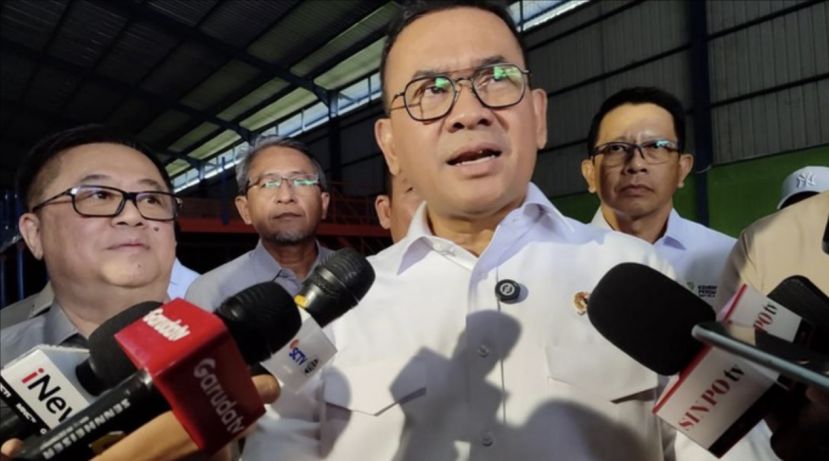
 The Minister of Trade recently decided to exempt imports of certain synthetic filament yarns from China from anti-dumping duties. This policy is based on a comprehensive assessment of the domestic textile industry's current situation and input from relevant stakeholders. Domestic production capacity for certain synthetic filament yarns cannot meet downstream industry demand, as most manufacturers produce only for their own use, resulting in limited market supply. Continuing to impose anti-dumping duties would increase production costs for downstream industries and weaken their market competitiveness. Minister of Finance Regulation No. 46 of 2023 already imposes safeguard duties on polyester staple fibers from India, China, and Taiwan. Affected by the COVID-19 pandemic, the textile industry's contribution to GDP fell from 1.3% in 2019 to 1.1% in 2024, requiring policy support to boost production. The decision was coordinated among the Coordinating Minister for Economic Affairs, Minister of Finance, Minister of National Development Planning, Minister of Industry, and other departments, and also considered input from the Business Competition Supervisory Commission and representatives of affected industries. The Indonesian Anti-Dumping Committee has been investigating dumping allegations on the relevant products since September 12, 2023, based on applications from two companies represented by the Indonesian Fiber Producers Association. The investigated products include synthetic filament yarns corresponding to HS codes 5402.33.10, 5402.33.90, etc., specifically classified as partially oriented yarns and drawn textured yarns. Some textile companies expressed disappointment with the duty exemption policy, expressing concerns about raw material cost fluctuations.
Indonesia Exempts Synthetic Fiber from China from Anti-Dumping Duties
www.indoent.com
2025-06-22
The Minister of Trade recently decided to exempt imports of certain synthetic filament yarns from China from anti-dumping duties. This policy is based on a comprehensive assessment of the domestic textile industry's current situation and input from relevant stakeholders. Domestic production capacity for certain synthetic filament yarns cannot meet downstream industry demand, as most manufacturers produce only for their own use, resulting in limited market supply. Continuing to impose anti-dumping duties would increase production costs for downstream industries and weaken their market competitiveness. Minister of Finance Regulation No. 46 of 2023 already imposes safeguard duties on polyester staple fibers from India, China, and Taiwan. Affected by the COVID-19 pandemic, the textile industry's contribution to GDP
The Minister of Trade recently decided to exempt imports of certain synthetic filament yarns from China from anti-dumping duties. This policy is based on a comprehensive assessment of the domestic textile industry's current situation and input from relevant stakeholders. Domestic production capacity for certain synthetic filament yarns cannot meet downstream industry demand, as most manufacturers produce only for their own use, resulting in limited market supply. Continuing to impose anti-dumping duties would increase production costs for downstream industries and weaken their market competitiveness. Minister of Finance Regulation No. 46 of 2023 already imposes safeguard duties on polyester staple fibers from India, China, and Taiwan. Affected by the COVID-19 pandemic, the textile industry's contribution to GDP fell from 1.3% in 2019 to 1.1% in 2024, requiring policy support to boost production. The decision was coordinated among the Coordinating Minister for Economic Affairs, Minister of Finance, Minister of National Development Planning, Minister of Industry, and other departments, and also considered input from the Business Competition Supervisory Commission and representatives of affected industries. The Indonesian Anti-Dumping Committee has been investigating dumping allegations on the relevant products since September 12, 2023, based on applications from two companies represented by the Indonesian Fiber Producers Association. The investigated products include synthetic filament yarns corresponding to HS codes 5402.33.10, 5402.33.90, etc., specifically classified as partially oriented yarns and drawn textured yarns. Some textile companies expressed disappointment with the duty exemption policy, expressing concerns about raw material cost fluctuations.
Tags
Policy Information
Share to
Related Reading
 Policy Information
Chinese Mainland and Hong Kong Enterprises Eligible for Relaxed Foreign Exchange Deposit Rules in Indonesia
2026-08-30 Policy Information
China-Indonesia Multi-Sector Strategic Cooperation Upgrade Blueprint
2026-08-23 Policy Information