
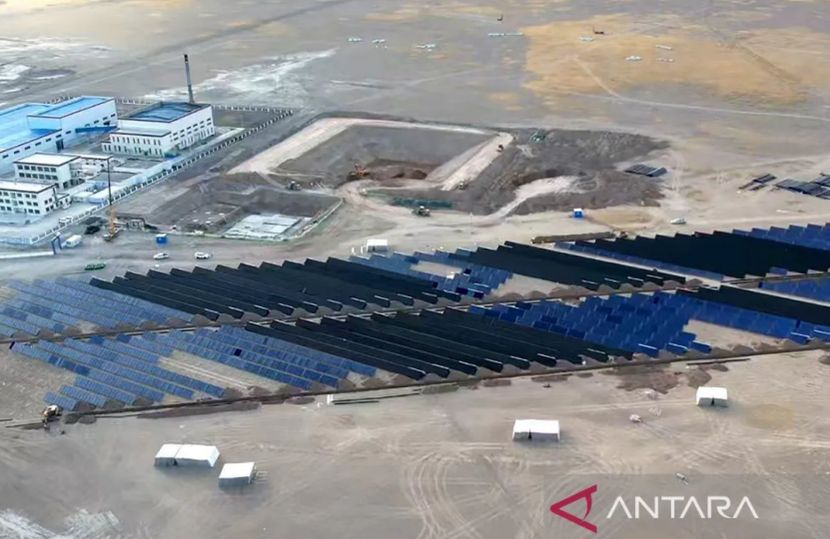
 The Energy Transition Institute (ESI) released a report stating that China's energy policy adjustment has caused structural pressure on Indonesia's coal industry. By increasing domestic coal production, optimizing energy logistics, and accelerating the clean energy transition, China has reduced its dependence on imported coal, whereas Indonesia previously accounted for 43% of coal exports to China.
The ESI research director pointed out that this policy shift is not a short-term market fluctuation but a long-term structural risk. Chinese domestic coal producers have become more efficient and more price-competitive, leading to a weakening of Indonesia's price advantage in coal exports. Furthermore, in 2024, over three-quarters of China's electricity demand growth came from clean energy, further compressing the market space for Indonesian coal.
Indonesia faces a dual challenge: on one hand, it must cope with the fiscal revenue impact from shrinking demand in the Chinese market (coal contributed over IDR 1,000 trillion in tax revenue in 2023); on the other hand, it must compete with China's efficient coal industry. If the export downturn persists, coal-producing regions will face significant revenue declines.
The report emphasizes that Indonesia cannot resolve the crisis merely by adjusting output or exploring new markets; it needs to formulate a long-term strategy that goes beyond seasonal market fluctuations to address the profound impact of China's energy transition.
The Energy Transition Institute (ESI) released a report stating that China's energy policy adjustment has caused structural pressure on Indonesia's coal industry. By increasing domestic coal production, optimizing energy logistics, and accelerating the clean energy transition, China has reduced its dependence on imported coal, whereas Indonesia previously accounted for 43% of coal exports to China.
The ESI research director pointed out that this policy shift is not a short-term market fluctuation but a long-term structural risk. Chinese domestic coal producers have become more efficient and more price-competitive, leading to a weakening of Indonesia's price advantage in coal exports. Furthermore, in 2024, over three-quarters of China's electricity demand growth came from clean energy, further compressing the market space for Indonesian coal.
Indonesia faces a dual challenge: on one hand, it must cope with the fiscal revenue impact from shrinking demand in the Chinese market (coal contributed over IDR 1,000 trillion in tax revenue in 2023); on the other hand, it must compete with China's efficient coal industry. If the export downturn persists, coal-producing regions will face significant revenue declines.
The report emphasizes that Indonesia cannot resolve the crisis merely by adjusting output or exploring new markets; it needs to formulate a long-term strategy that goes beyond seasonal market fluctuations to address the profound impact of China's energy transition.
China's Energy Policy Adjustment Impacts Indonesia's Coal Industry
www.indoent.com
2025-10-31
The Energy Transition Institute (ESI) released a report stating that China's energy policy adjustment has caused structural pressure on Indonesia's coal industry. By increasing domestic coal production, optimizing energy logistics, and accelerating the clean energy transition, China has reduced its dependence on imported coal, whereas Indonesia previously accounted for 43% of coal exports to China. The ESI research director pointed out that this policy shift is not a short-term market fluctuation but a long-term structural risk. Chinese domestic coal producers have become more efficient and more price-competitive, weakening Indonesia's price advantage in coal exports. Additionally, in 2024, China's
The Energy Transition Institute (ESI) released a report stating that China's energy policy adjustment has caused structural pressure on Indonesia's coal industry. By increasing domestic coal production, optimizing energy logistics, and accelerating the clean energy transition, China has reduced its dependence on imported coal, whereas Indonesia previously accounted for 43% of coal exports to China.
The ESI research director pointed out that this policy shift is not a short-term market fluctuation but a long-term structural risk. Chinese domestic coal producers have become more efficient and more price-competitive, leading to a weakening of Indonesia's price advantage in coal exports. Furthermore, in 2024, over three-quarters of China's electricity demand growth came from clean energy, further compressing the market space for Indonesian coal.
Indonesia faces a dual challenge: on one hand, it must cope with the fiscal revenue impact from shrinking demand in the Chinese market (coal contributed over IDR 1,000 trillion in tax revenue in 2023); on the other hand, it must compete with China's efficient coal industry. If the export downturn persists, coal-producing regions will face significant revenue declines.
The report emphasizes that Indonesia cannot resolve the crisis merely by adjusting output or exploring new markets; it needs to formulate a long-term strategy that goes beyond seasonal market fluctuations to address the profound impact of China's energy transition.
Tags
Industry News
Share to
Related Reading
 Industry Flash
Cheap Chinese Plastics Impact Indonesia's Petrochemical Industry, Association Calls for Protection
2026-09-03 Industry News
Investment Heat in Two Key Industrial Parks in Central Java Continues to Rise
2026-08-31 Industry News